
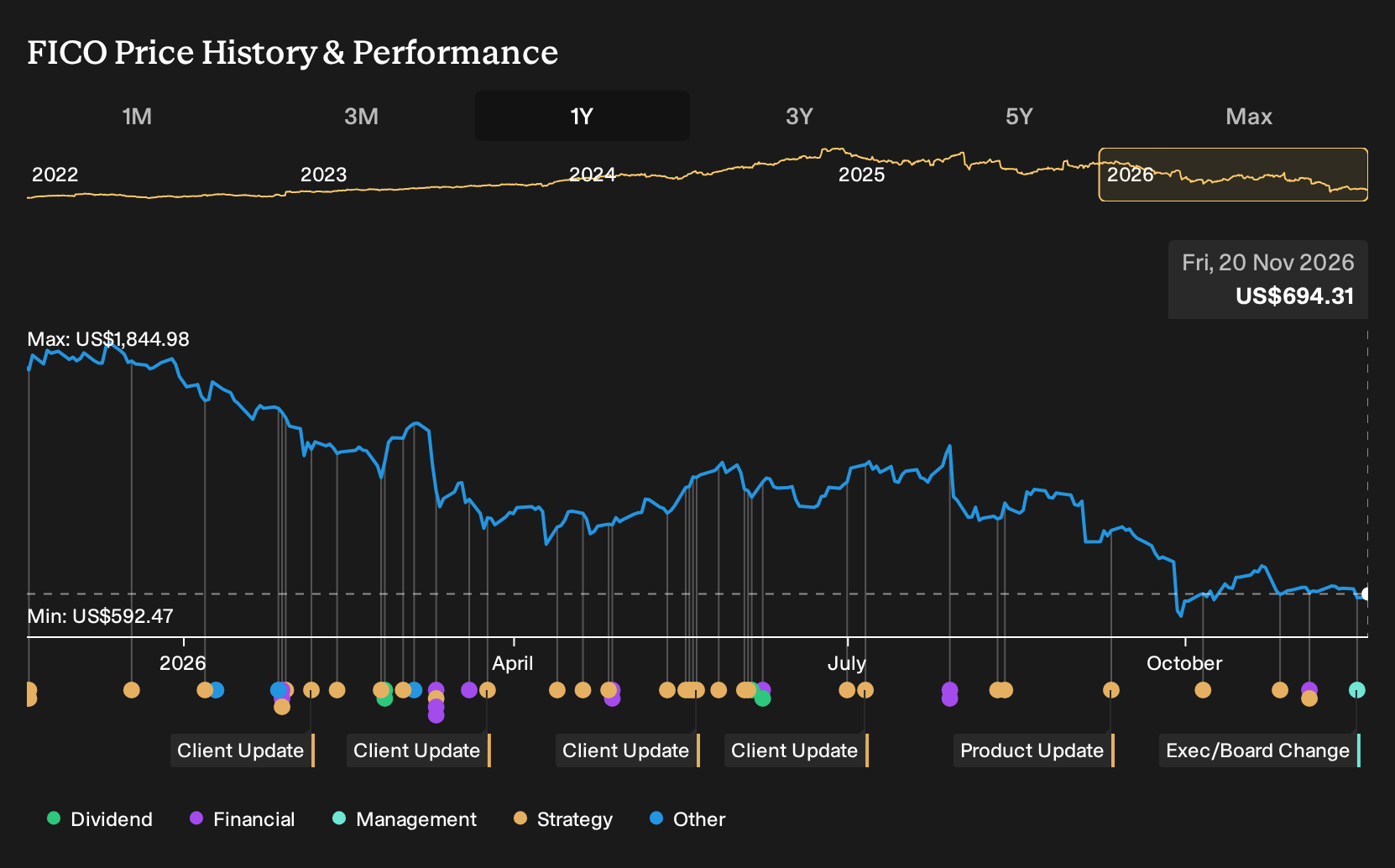
Fair Isaac looked like a powerhouse on paper, with Q4 2026 revenue and net income both higher than a year earlier even as net margin slipped. Holding Fair Isaac over the past year would have meant a 61.2% loss, including dividends. If you had seen strong mortgage score pricing, fast Scores growth, and upbeat analyst targets back in November 2025, how could such a severe outcome still sit inside the range of plausible risks?
Fair Isaac has already moved. Pinpoint other ways to investigate the theme among 41 AI small caps.
The Two Stories Fair Isaac Investors Had To Weigh
The shares cost US$1,721 at the start of the period, and anyone buying Fair Isaac then was choosing between two very different stories about the future.
The bullish November 2025 view saw a fair value of US$1,875, a price implied by assumptions that revenue could rise 14.3% a year and profit margin reach 36.8%. That narrative leaned on cloud transition, AI decisioning, and FICO Score 10 T as drivers of market leadership.
The bearish June 2025 case pointed to a fair value of US$1,364, again an assumptions-based number, built on 13.0% annual revenue growth and a 38.0% margin. It centred on tighter data privacy rules, DeFi alternatives, and major partners potentially moving away from FICO based scoring.
What The Facts Did To The Fair Isaac Story
The key development for Fair Isaac was regulation. The FHFA opened the door to VantageScore for government backed mortgages, and a unified pricing grid challenged FICO’s premium. That directly tested the bullish view that mortgage score pricing and market dominance could support higher margins, especially as net margin slipped while revenue and profit rose. Overall, the evidence cut both ways.
The lesson is clear. When a thesis leans on pricing power and market share, you track regulatory rulings and segment level margins, not just headline growth.
What Fair Isaac’s Drop Asks You To Believe Today
With Fair Isaac now at US$694 and down 61.2% over the past year, the analyst consensus Narrative on Simply Wall St still places its Fair Value above that level, based on the idea that the franchise is more than its pressured mortgage scoring line.
To see the fall as opportunity rather than warning, a buyer today would need to believe that FICO Platform and newer scores can offset mortgage pressure while keeping margins broadly in line with recent non GAAP levels.
"The main thing that has to go right is that FICO Platform and newer scores like FICO Score 10T and UltraFICO offset the regulatory driven erosion of the legacy mortgage scoring franchise and support margins similar to recent non GAAP levels."
Not everyone reads the same price the same way. → See the higher figure this Narrative lands on, and how it gets there
Looking Beyond Fair Isaac’s Scores
Fair Isaac’s story is about decisions. Credit files, pricing grids, and risk calls shape lender options.
Step away and you reach a different bottleneck. Building complex decision tools often depends on hired AI muscle.
Another specialist supplies that firepower, offering models for multi step coding and research work.
Its tools help banks, hospitals, law firms, and universities shift more tasks into software agents.
If that shift accelerates, the crucial puzzle is who captures value from those outsourced digital decisions.
It is written up in full, assumptions and all. → Explore the Narrative that puts this company 62% above its price
Have feedback on this article? Concerned about the content? Get in touch with us directly. Alternatively, email editorial-team@simplywallst.com