
Mortgage scoring is quietly being rewired as FICO’s grip loosens and VantageScore 4.0 steps onto center stage, and that shift touches everything from borrower access to how US$13b of mortgage risk gets priced. That kind of rule change can punish some stocks while creating new lanes for others, and the market rarely waits. This article walks through three stocks closely exposed to this news and how these ripple effects might matter for your portfolio.
The three stocks in focus below are just a starting sample, and the full screen surfaced 9 more mortgage originators and servicers with equally compelling narratives that are not covered in this article. If you want to identify potential beneficiaries or pressure points across this corner of housing finance, head straight to the US Mortgage Originators & Servicers screener.
Beeline Holdings (BLNE)
Beeline Holdings is a US-focused fintech mortgage lender that uses AI, automation and a digital front end to originate and process home loans, title and fractional equity products. Most revenue comes from Beeline Loans at about US$8.7 million, with Beeline Title Holdings near US$1.5 million. The stock is micro cap at roughly US$23 million.
Beeline Holdings sits squarely in the US mortgage origination theme, building a tech-heavy platform that aims to reduce underwriting friction and speed up closings. For investors focused on how credit scoring changes affect real origination economics, this small lender offers a live test of what happens when efficiency interacts with a regulatory rulebook that is still evolving.
To see how that playbook might actually translate into risk and upside, pull up the 1 key reward and 2 important warning signs (2 are major!) and see what the current numbers are hinting at.

PennyMac Financial Services (PFSI)
PennyMac Financial Services is a US mortgage banking specialist that originates and services conforming and government backed home loans, with about US$1.5b from Production, US$675 million from Servicing and US$61 million from Corporate and Other, and a market value near US$3.1b.
For a screener built around how mortgage origination and servicing respond when the rulebook changes, PennyMac Financial Services is where policy meets scale. This is why the most interesting part of the story is what its efficiency engine looks like under the hood.
The company's low cost servicing platform, with direct expense per loan at about US$89 in 2025 and a guided path toward roughly US$55 by 2028 to 2029, together with roughly US$731b of servicing UPB generating around US$530m of quarterly servicing fee revenue, provides a large fee pool that can support more stable earnings and margin resilience through rate cycles.
The real swing factor for PennyMac Financial Services is what happens if a single assumption in that long term efficiency plan fails to hold.
If that assumption is what worries you, read the full narrative for PennyMac Financial Services to see where PennyMac Financial Services could be accelerating or where efficiency gains might stall.

Merchants Bancorp (MBIN)
Merchants Bancorp is a US bank holding company tied into mortgage origination and servicing through multi-family mortgage banking, mortgage warehousing, and retail and correspondent mortgage lending. It generates about US$275 million from Banking, US$182 million from Multi-Family Mortgage Banking, US$174 million from Mortgage Warehousing, and has a roughly US$2.2b market value.
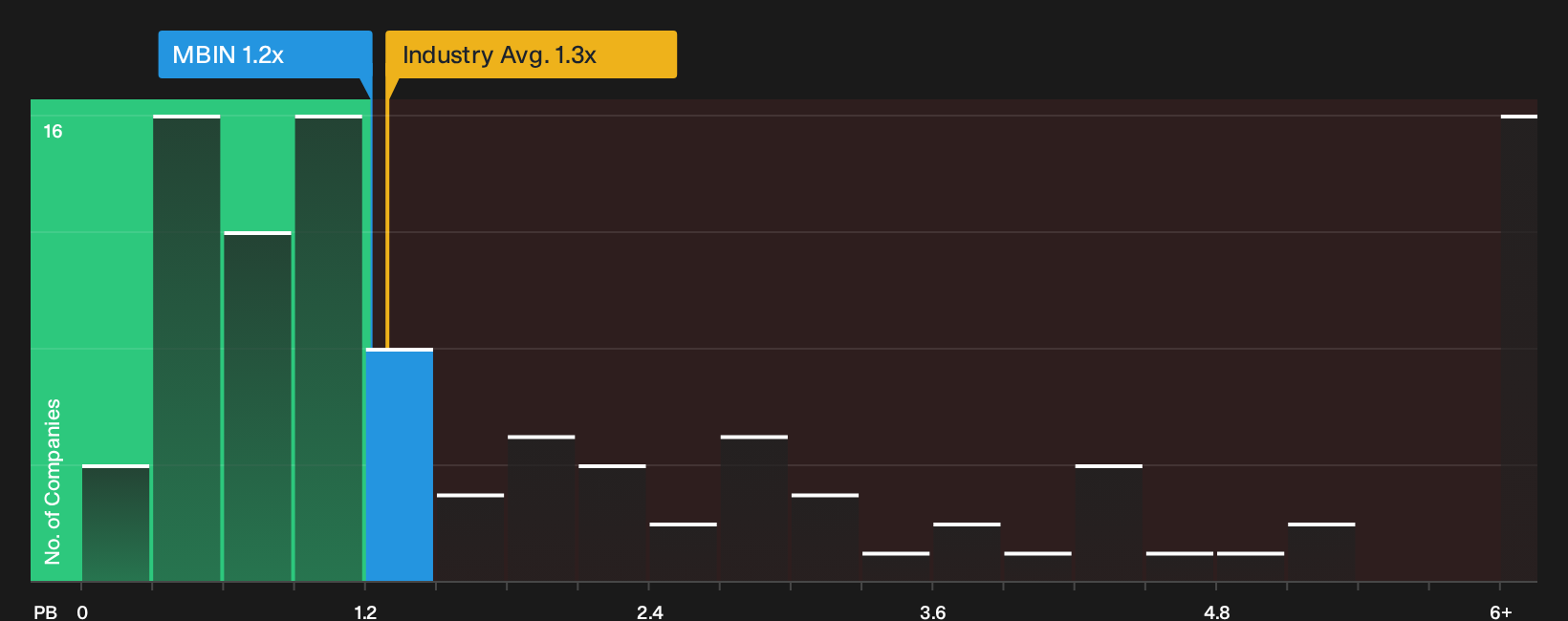
For mortgage-focused investors, Merchants Bancorp offers a blend of deposit-funded banking and government-backed multi-family and residential lending that sits squarely inside the US mortgage origination and servicing theme. A single digit P/E and a value signal well below one fair value estimate highlight a lender whose returns could be sensitive to any change in pressures on its mortgage margins.
That kind of pressure on mortgage margins is exactly why the 4 key rewards and 2 important warning signs could surface, where Merchants Bancorp’s story is quietly decoupling from expectations.
Seeking Alternatives Before Momentum Flies
Fresh ideas move first, and slow research often gets caught chasing stocks already breaking out while the best entry points are dropping away under the radar for now, act now.
- Spot potential early movers by scanning the 29 high quality undervalued stocks that combine solid balance sheets with cash flows built to keep momentum while it still matters.
- Track where AI spending could be flowing next by checking the curated 92 AI infrastructure stocks packed with picks tied to the physical backbone of machine learning.
- Position ahead of the next automation wave by reviewing the hand-picked 91 robotics and automation stocks capturing companies geared to industrial robots, warehouse systems, and smart factories.
This article by Simply Wall St is general in nature. We provide commentary based on historical data and analyst forecasts only using an unbiased methodology and our articles are not intended to be financial advice. It does not constitute a recommendation to buy or sell any stock, and does not take account of your objectives, or your financial situation. We aim to bring you long-term focused analysis driven by fundamental data. Note that our analysis may not factor in the latest price-sensitive company announcements or qualitative material. Simply Wall St has no position in any stocks mentioned.
Have feedback on this article? Concerned about the content? Get in touch with us directly. Alternatively, email editorial-team@simplywallst.com