
With Fed officials talking up the case for higher rates and investors waiting on Kevin Warsh’s Jackson Hole speech, cash and money-market strategies are back in the spotlight. That backdrop can shift how asset managers earn fees, attract new assets, or face pressure on flows. This article walks through three U.S. asset managers from the screener that appear most exposed to these headlines and explains why their stories matter now.
The stocks highlighted below are just a starting sample, and the full screen surfaced 6 more U.S. cash and money-market asset managers with equally compelling narratives that are not covered here. Identify your own highest-conviction ideas by going straight to the U.S. Cash & Money-Market Asset Managers screener.
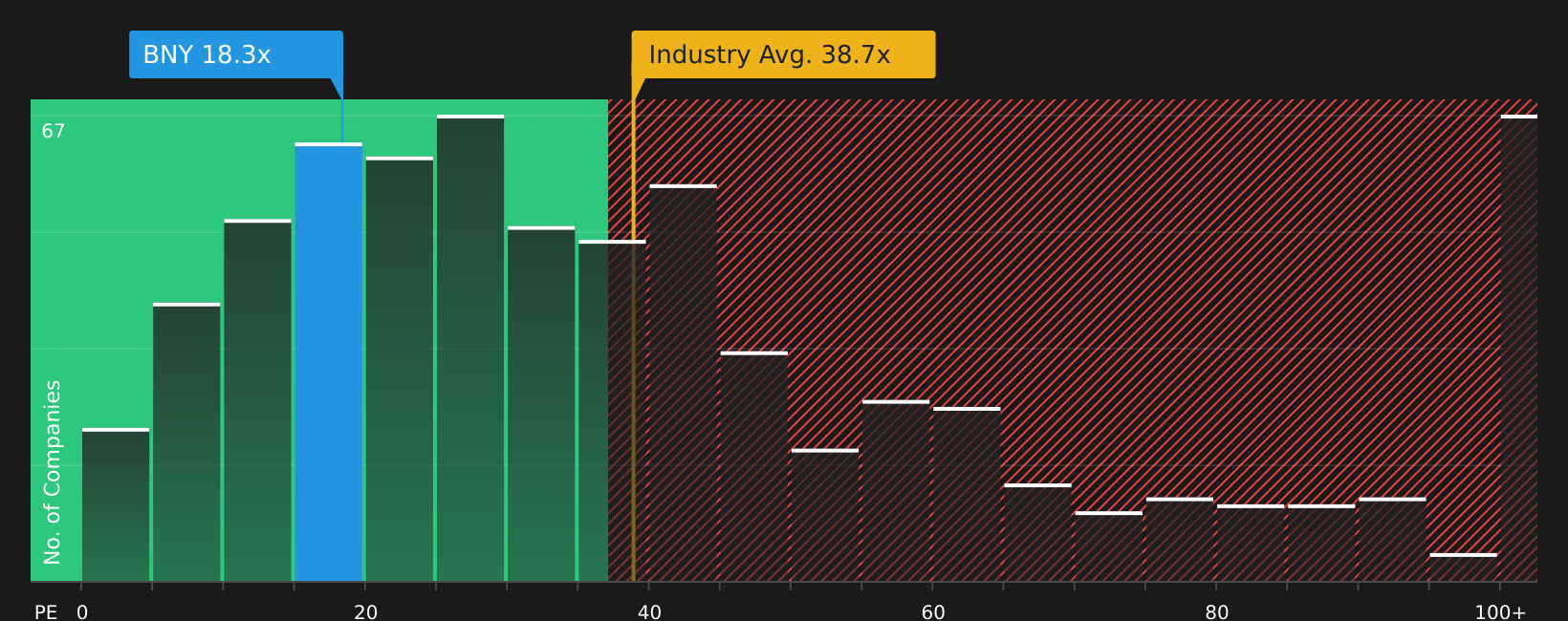
Bank of New York Mellon (BNY)
Overview: Bank of New York Mellon is a global custodian and asset servicer that helps large institutions park, move and safeguard cash, securities and other assets, including through money-market and cash management solutions that fit squarely with the screener theme. Its platforms support everything from short term liquidity vehicles and sweep cash to investment and wealth management for governments, financial institutions and high net-worth clients.
Operations: Bank of New York Mellon generates most of its revenue from Securities Services at about US$10.5b, followed by Market and Wealth Services at about US$7.4b, Investment and Wealth Management at about US$3.4b, and around US$61 million from Other activities.
Market Cap: US$110.7b
For investors focused on cash and money-market exposure, Bank of New York Mellon is worth a close look because its core custody and treasury platforms handle a large share of institutional liquidity, from sweep cash to T bill settlement. Rising attention on Fed policy and short term rates can keep clients focused on money-market funds, repo and collateral services where the company already plays a central operational role, including through its work on the Fed’s repo facilities and on-chain money-market initiatives. At the same time, fee pressure, reliance on market levels and early stage efficiency programs mean execution risk is real. The mix of solid profitability, digital asset projects around tokenized money-market funds and a broad liquidity franchise makes the trade off here more interesting than a simple rate bet.
BNY Mellon’s liquidity engine, from repo pipes to tokenized money-market funds, could be masking a very different risk reward picture from the headline story. Get the full context in the 3 key rewards and 1 important warning sign
State Street (STT)
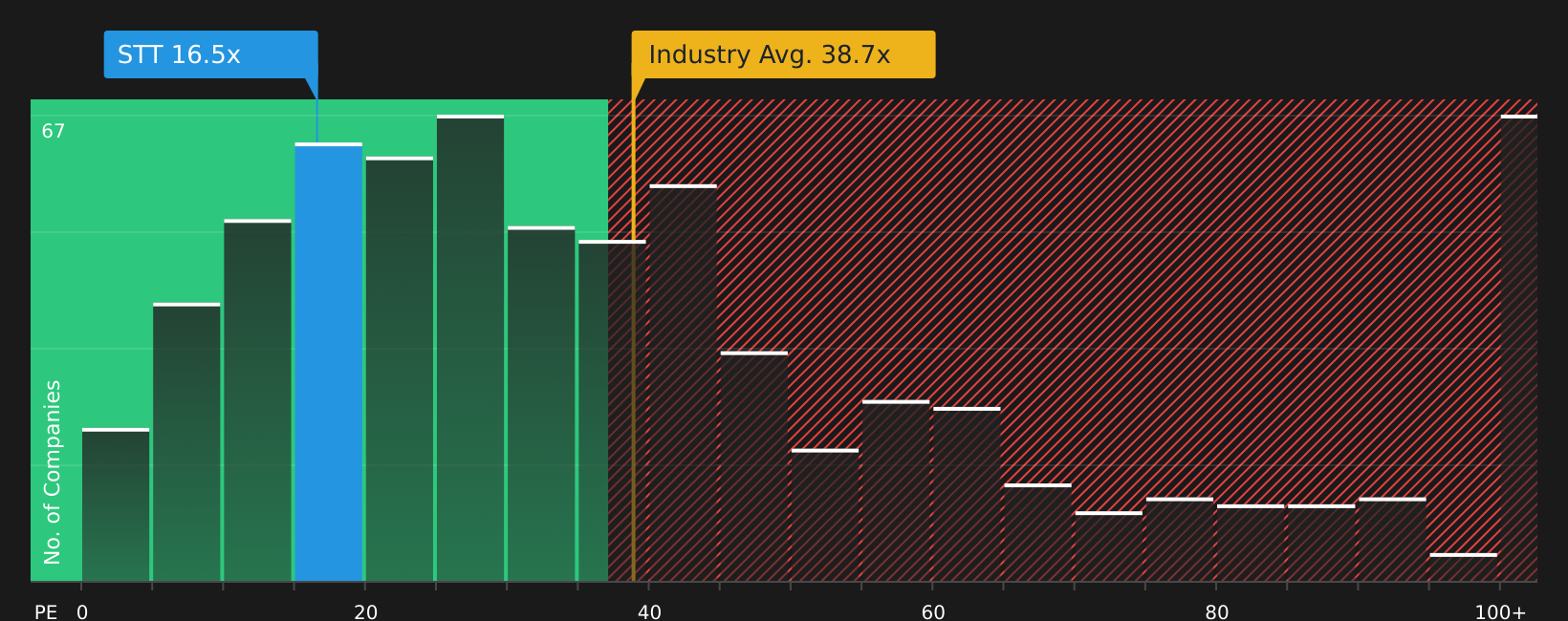
Overview: State Street is a Boston based custodian and asset manager that runs the plumbing for large institutional investors, handling custody, accounting, trading and data, while also offering money-market and short duration cash strategies that fit squarely with this screener’s focus on liquidity and cash management.
Operations: State Street generates most of its revenue from Investment Servicing at about US$12.1b, with a further US$3.0b from Investment Management, across clients in the United States and overseas.
Market Cap: US$53.2b
State Street provides exposure to the cash and liquidity theme through a global custody and ETF business that can be relevant when institutions hold more cash, trade frequently and use money-market or short duration products while they wait for clearer Fed signals. The company combines fee based servicing and asset management income with a cash rich balance sheet and has been working on technology and efficiency programs that may support margins if implemented effectively. There are also risks to consider. Fee pressure in index and ETF products, evolving settlement technology and regulatory demands may affect profitability if State Street moves too slowly or misprices services. Understanding this trade off is central to analyzing the company.
State Street’s fee engine and cash rich balance sheet could be telling a different story than the headline liquidity theme suggests. Walk through the full risk reward trade off in the 5 key rewards and 1 important warning sign.
BlackRock (BLK)
Overview: BlackRock is a global investment manager that runs a wide range of funds and portfolios for governments, pension plans, insurers, banks and individual investors, including cash, money-market and short duration products that fit directly with this screener’s liquidity theme. Alongside these, BlackRock offers ETFs, mutual funds, alternatives, real estate and advisory services across public and private markets worldwide.
Operations: BlackRock generates about US$27.3b in revenue from its Asset Management Business, with roughly US$18.0b from the Americas, US$8.0b from Europe and US$1.3b from Asia-Pacific.
Market Cap: US$190.6b
BlackRock is worth your attention if you care about where cash goes when investors sit on the sidelines. Its scale in money-market and cash-management funds, combined with ETFs, private markets and technology platforms like Aladdin, gives it several ways to earn fees when clients park capital and later shift back into risk assets as Fed policy becomes clearer. At the same time, margin pressure, high executive pay and heavy investment in technology and alternatives introduce execution and regulatory risks. An important question is how its push into tokenized money-market funds, stablecoin reserve products and AI infrastructure financing could reshape that cash franchise and what that might mean for long term earnings power and volatility.
BlackRock’s expanding cash, ETF and tokenized money-market ecosystem could be rewriting how liquidity earns fees. Get the missing piece in the analyst forecasts for BlackRock and see what its next shift might hinge on.

Seeking Alternatives Before The Crowd Moves
Fresh stock themes can gain breakout momentum fast. Some stay under the radar for now, others get caught once attention flies in. Check these ideas while it matters and act now.
- Spot companies building long term income streams by reviewing the 12 dividend fortresses before yields drop or valuations re-rate and get in ahead of income focused investors.
- Track potential future infrastructure winners backing AI momentum through the 55 AI infrastructure stocks and position yourself before spending flows reshape expectations.
- Catch early movers in digital assets by scanning the 20 cryptocurrency and blockchain stocks while sentiment swings and before broader capital rotates into the next cycle.
This article by Simply Wall St is general in nature. We provide commentary based on historical data and analyst forecasts only using an unbiased methodology and our articles are not intended to be financial advice. It does not constitute a recommendation to buy or sell any stock, and does not take account of your objectives, or your financial situation. We aim to bring you long-term focused analysis driven by fundamental data. Note that our analysis may not factor in the latest price-sensitive company announcements or qualitative material. Simply Wall St has no position in any stocks mentioned.
Have feedback on this article? Concerned about the content? Get in touch with us directly. Alternatively, email editorial-team@simplywallst.com