
- Federal Trade Commission reaches a settlement with Cigna Group’s Express Scripts unit, requiring major reforms to its pharmacy benefit management practices.
- Key changes include ending spread pricing, adopting cost plus reimbursement for independent pharmacies, increasing transparency on drug spending, and relocating its group purchasing organization to the U.S.
- The settlement carries implications for drug pricing, patient costs, and how pharmacy benefit managers operate across the U.S. healthcare system.
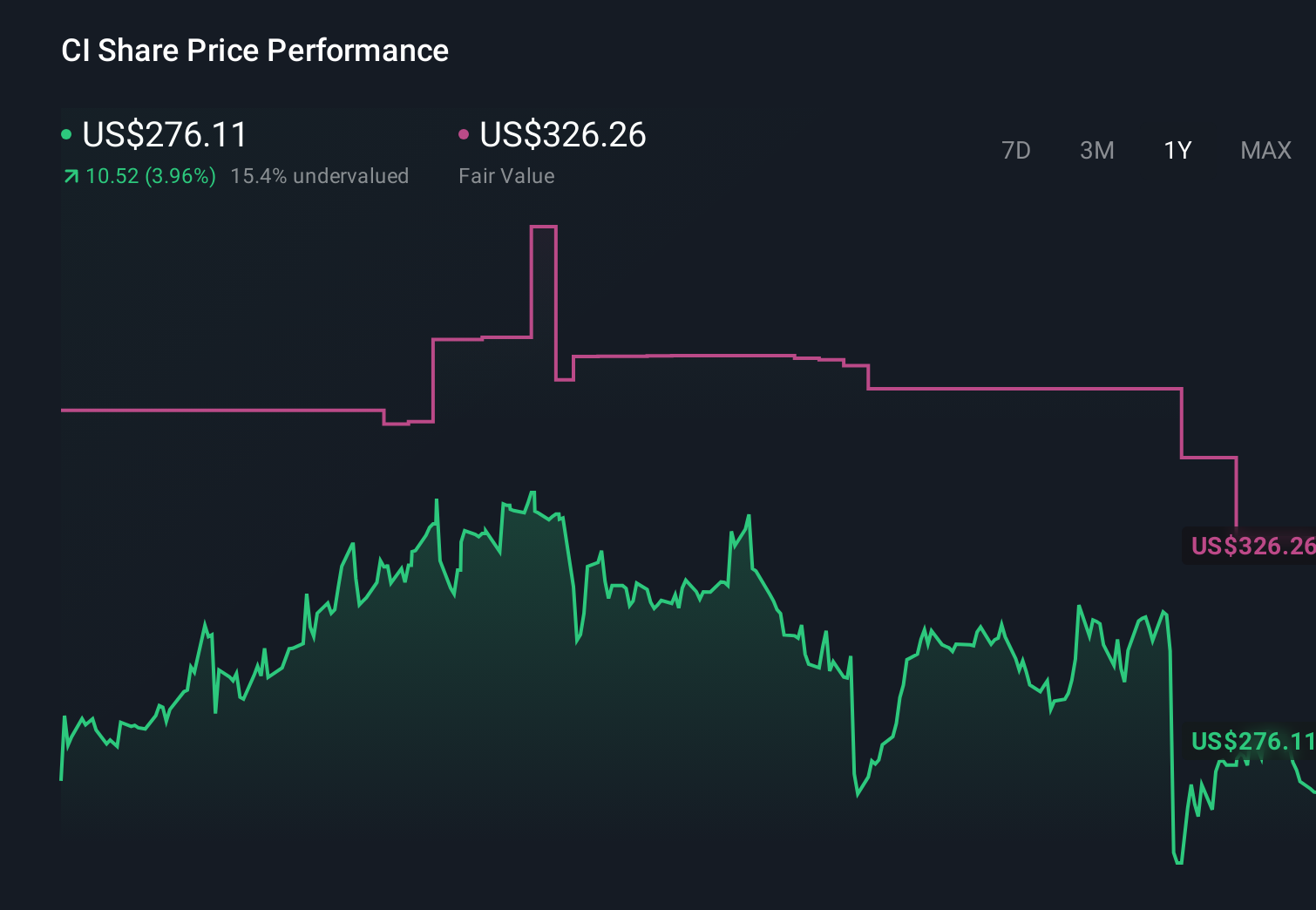
Cigna Group (NYSE:CI), which closed at $284.53, now faces a material shift in how its Express Scripts pharmacy benefit management arm operates. The stock is up 4.9% over the past week and 49.2% over 5 years, so investors are already familiar with periodic regulatory and business model headlines around the company. This settlement, however, directly targets core profit routes and cost structures in its pharmacy benefits business.
For you as an investor, the key question is how tighter FTC oversight and new pricing rules could influence Cigna’s pharmacy benefit margins and competitive stance relative to peers. The required transparency and U.S. based purchasing structure may also shape how employers, health plans, and independent pharmacies view Express Scripts as a partner over time.
Stay updated on the most important news stories for Cigna Group by adding it to your watchlist or portfolio. Alternatively, explore our Community to discover new perspectives on Cigna Group.
Is Cigna Group financially strong enough to weather the next crisis?
The FTC settlement goes straight to the heart of Express Scripts’ pharmacy benefit model, pushing it toward cost plus reimbursement, no spread pricing, and greater fee transparency. For you, the key issue is how quickly Cigna can rework contracts and operations so that changes in drug pricing mechanics, including no longer preferring higher priced drugs over cheaper equivalents, do not materially squeeze Evernorth earnings or weaken its position versus CVS Health and UnitedHealth’s OptumRx.
Cigna Group narrative, now with a tougher PBM rulebook
This development links directly to the existing narrative that Cigna leans heavily on Evernorth’s pharmacy benefit services for growth. Management is already promoting a rebate free pharmacy benefits model and highlighting the settlement’s projected US$7b of out of pocket cost relief over 10 years, which suggests the company is trying to align its long term story of specialty pharmacy and digital tools with a more transparent, regulator friendly PBM structure.
Risks and rewards on tighter FTC oversight
- ⚠️ Margin pressure risk if cost plus reimbursement and loss of spread pricing reduce PBM profitability faster than Cigna can take out costs or renegotiate client terms.
- ⚠️ Regulatory and legal risk, with 10 years of FTC monitoring increasing scrutiny on future contract design compared with peers like CVS and UnitedHealth Group.
- 🎁 Potential competitive benefit if employers and independent pharmacies view the new model as more predictable and transparent, supporting client retention and wins.
- 🎁 Brand and policy tailwind if lower patient out of pocket costs and a rebate free model line up well with ongoing federal affordability efforts.
What to watch next
From here, you will want to track how Cigna discloses the earnings impact of the settlement, how fast it rolls out cost plus contracts, and whether client wins or losses in Evernorth signal that the new design is resonating in a PBM market shared with CVS and UnitedHealth. If you want to see how other investors and analysts are framing this shift around long term growth, margins, and regulatory risk, check community narratives on Cigna’s dedicated page.
This article by Simply Wall St is general in nature. We provide commentary based on historical data and analyst forecasts only using an unbiased methodology and our articles are not intended to be financial advice. It does not constitute a recommendation to buy or sell any stock, and does not take account of your objectives, or your financial situation. We aim to bring you long-term focused analysis driven by fundamental data. Note that our analysis may not factor in the latest price-sensitive company announcements or qualitative material. Simply Wall St has no position in any stocks mentioned.
Have feedback on this article? Concerned about the content? Get in touch with us directly. Alternatively, email editorial-team@simplywallst.com