
- NXP Semiconductors has completed the sale of its MEMS sensor business.
- The company is exiting new RF Power developments and winding down that activity.
- Management is concentrating resources on software-defined vehicles, physical AI, and industrial/IoT opportunities.
- These moves come as NXP adjusts its portfolio in the context of margin and inventory pressures.
NXP Semiconductors (NasdaqGS:NXPI) is reshaping its business around areas it views as core to its future identity, while stepping away from MEMS sensors and new RF Power projects. The shares recently closed at $226.86, with a 1 year return of 8.4% and a 3 year return of 27.7%. Over 5 years, the stock has returned 31.7%, which gives investors some context on how the market has historically reacted to the company’s shifting priorities.
The current focus on software-defined vehicles, physical AI, and industrial and IoT opportunities indicates that NXP is concentrating on segments it sees as more central to its long term direction. For investors, the key consideration is how effectively this streamlined portfolio and targeted acquisition approach may influence the resilience of the business model in light of the margin and inventory challenges the company is working through.
Stay updated on the most important news stories for NXP Semiconductors by adding it to your watchlist or portfolio. Alternatively, explore our Community to discover new perspectives on NXP Semiconductors.
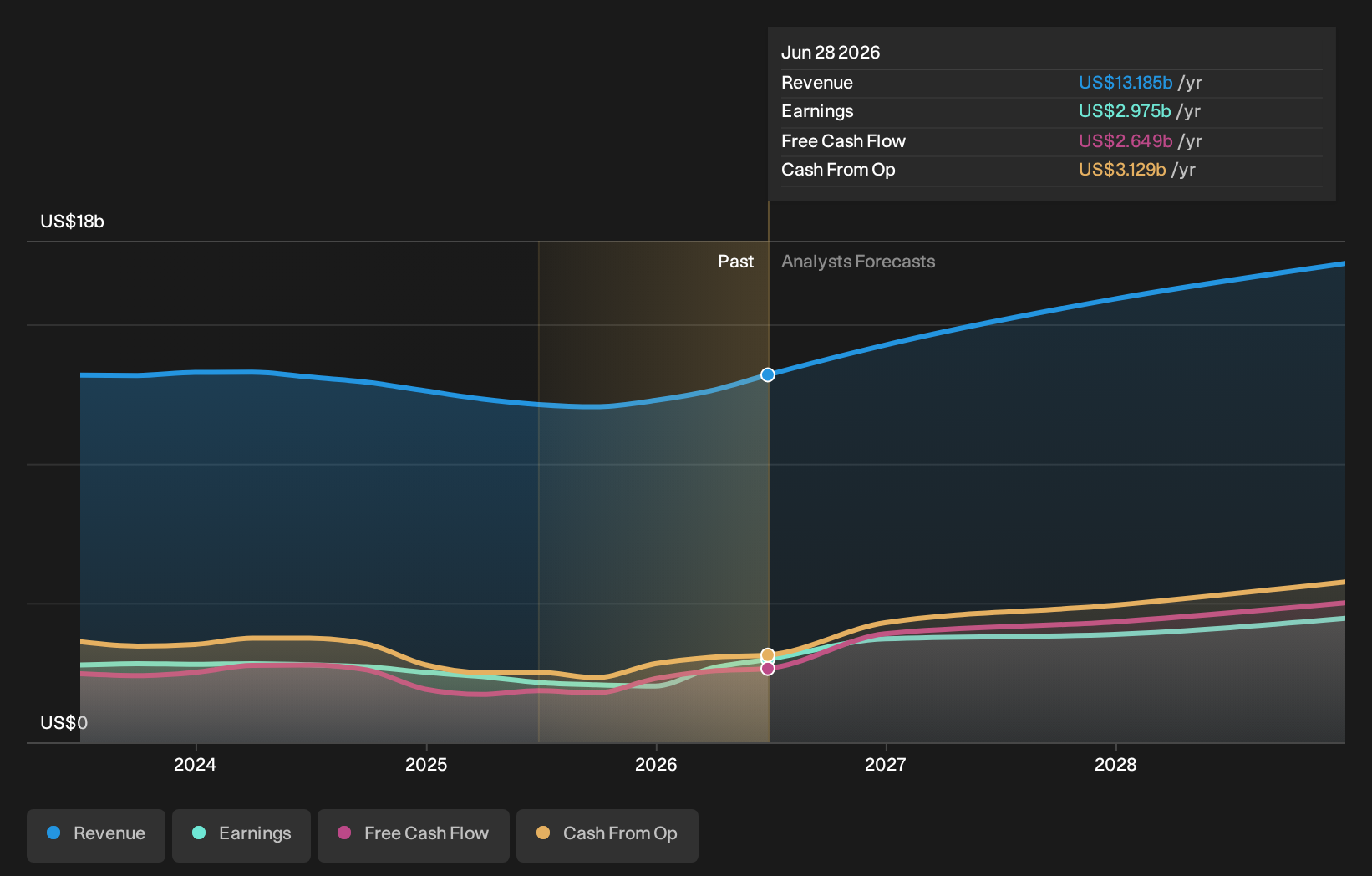
How NXP Semiconductors stacks up against its biggest competitors
NXP’s decision to sell its MEMS sensor business and stop new RF Power development tightens its focus on automotive, industrial and IoT markets where it already has scale, especially as automotive now represents a majority of revenue. With Q4 2025 sales of US$3.34b, Q1 2026 guidance of US$3.05b to US$3.25b and continued investment in software-defined vehicles and physical AI, the company is effectively exiting smaller or lower-priority lines to concentrate capital and R&D where management sees the clearest product roadmap, similar to how peers like Texas Instruments and Infineon have refined their own portfolios.
NXP Semiconductors narrative, and how this move fits the story
The MEMS and RF Power moves line up closely with both the bullish and cautious community narratives that center on edge AI and automotive platforms as key long-term drivers. Acquisitions in areas such as in-vehicle connectivity and automotive software are now paired with divestitures in non-core products, which may support the more optimistic storyline, while concerns about macro headwinds, auto exposure and execution risk in new product areas remain consistent with the more conservative view.
Risks and rewards investors should weigh now
- Sharper focus on automotive, industrial and IoT, plus US$3.05b to US$3.25b Q1 revenue guidance, could help simplify the business model and resource allocation.
- The US$900m MEMS sale and portfolio reshaping may free cash and management attention for higher-value edge AI and software-defined vehicle programs where NXP competes with names like STMicroelectronics and Qualcomm.
- Elevated inventory at 153 days and a downward trend in gross margin point to execution risk if demand or pricing in key end markets softens further.
- Heavier reliance on automotive and industrial customers increases sensitivity to sector-specific slowdowns and to any delay in design wins turning into sustained volume.
What to watch next
From here, it is worth tracking whether automotive and industrial or IoT revenue growth offsets weakness in communications infrastructure, and whether gross margin stabilizes as new manufacturing strategies ramp. If you want a broader range of views on how this portfolio reset could play out over several years, take a look at the community narratives for NXP Semiconductors through analyst and community viewpoints on the stock.
This article by Simply Wall St is general in nature. We provide commentary based on historical data and analyst forecasts only using an unbiased methodology and our articles are not intended to be financial advice. It does not constitute a recommendation to buy or sell any stock, and does not take account of your objectives, or your financial situation. We aim to bring you long-term focused analysis driven by fundamental data. Note that our analysis may not factor in the latest price-sensitive company announcements or qualitative material. Simply Wall St has no position in any stocks mentioned.
Have feedback on this article? Concerned about the content? Get in touch with us directly. Alternatively, email editorial-team@simplywallst.com