Modern Solutions for Enhanced Security
Our ongoing commitment to advanced security measures ensures that our users' accounts are protected against emerging threats.
Passkey
What is a Passkey?
A passkey is a digital credential that is unique to your device. Unlike traditional passwords, passkeys are not visible to anyone and cannot be written down or accidentally given to a third party. This significantly reduces the threat of phishing and scams.
Benefits of Using Passkeys in Webull
- Enhanced Security: Passkeys provide an additional layer of protection for your Webull account. They use advanced technologies to ensure that your credentials are secure.
- Ease of Use: Signing in with a passkey is quick and straightforward. You no longer need to remember complex passwords.
- Phishing Protection: Since passkeys cannot be shared or written down, they reduce the risk of phishing attacks and other scams.
How to Set Up a Passkey in Webull
Setting up a passkey in the Webull app is simple:
- Open the Webull App: Ensure you have the latest version of the Webull app installed.
- Navigate to Settings: Go to the settings menu within the app.
- Select the Account and Security Setting
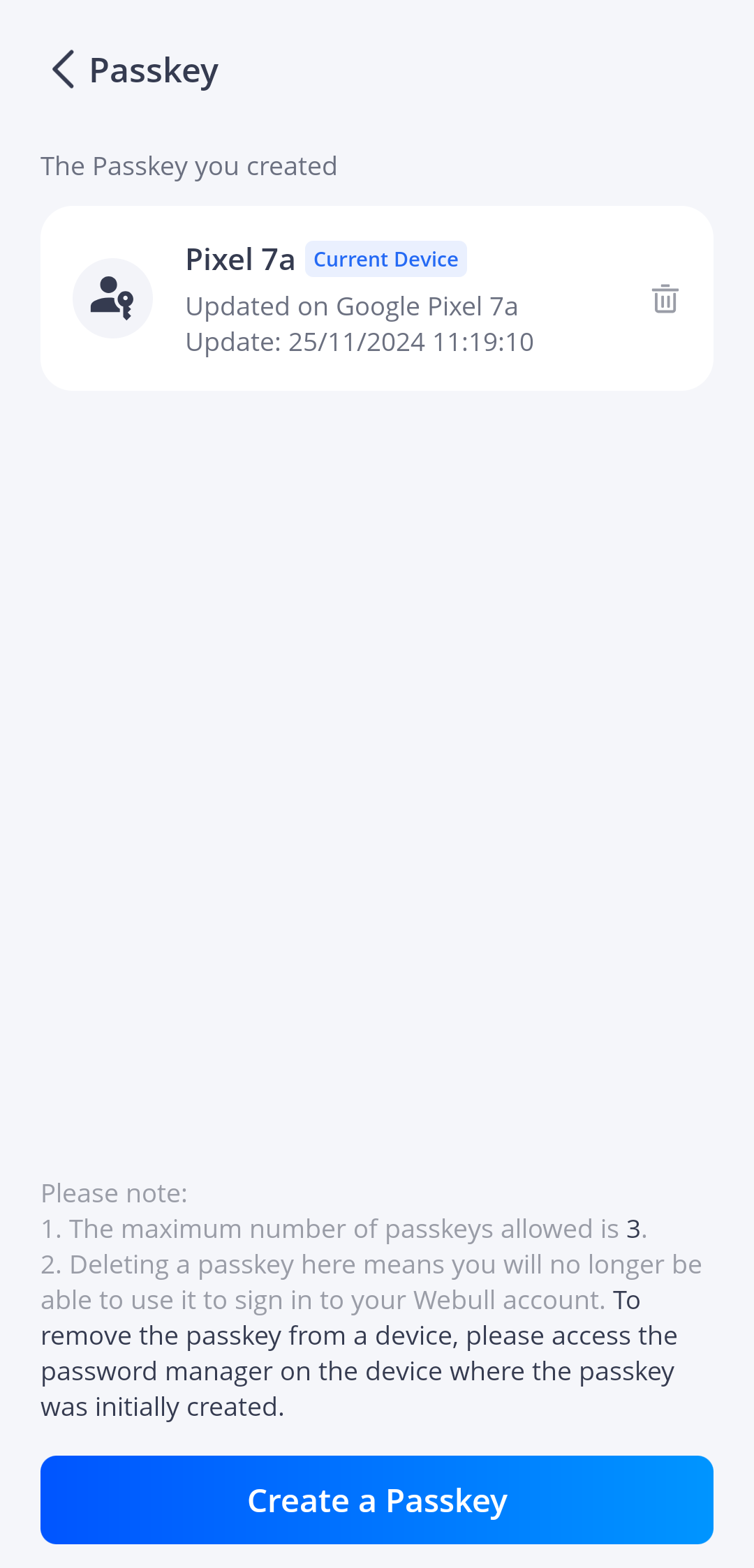
- Click into the Passkey section
- Create a Passkey: Follow the on-screen instructions to create your passkey.
Deposit & Withdrawal Control
To further enhance our security measures, we've also implemented bank statement verification for all deposits and withdrawals:
Deposits
- In addition to the existing account name validation process, for all PayTo payments, customers will need to upload a bank statement for Webull to validate the account holder's name. If this validation fails, the payment initiation will not be triggered, and Webull will cancel the payment agreement.
- All deposits must pass through Webull’s automatic name validation system, which maps the Webull Brokerage Account name to the Client Bank Account name.
Withdrawals
- For all withdrawals, customers are required to upload a bank statement to validate the ownership of the bank account.
These measurements ensure that we receive payments from the account holder, not third parties, and only allow withdrawals to the account holder, minimising the risk of scam or fraudulent transactions.