Making a First-Time Investment
When taking the plunge as a new investor, you want to be certain that you’re putting your money in the right places. With a bit of knowledge but no experience, it can be scary to make that initial investment, with no way to know whether you’ll make a profit or take a loss. Is there a best way to invest? How do you choose? Can you mitigate risk?
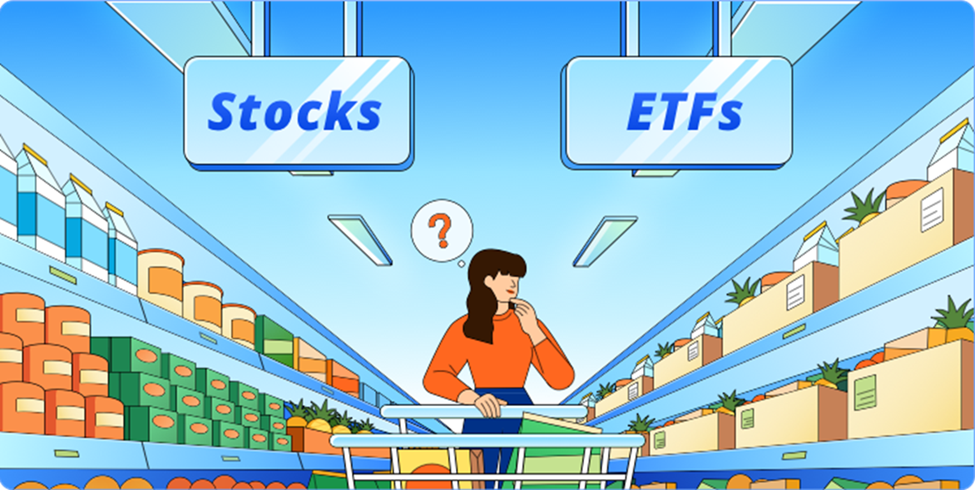
1. If you want to buy a stock…
You may have an interest in buying a particular stock, but don’t currently have the budget to do so. It might seem too pricy for your first trade. What do you do? Check out this scenario:
Example:
Industry-leading company ABC is priced at $2000 per share and you only have $100 in your brokerage account.
Choice 1: Deposit funds you cannot afford to risk and purchase a whole share?
Choice 2: Buy a fractional share of the company for $100?
2. If you think stocks are too risky and want to diversify your investment risk…
You can buy multiple assets to disperse risk when investing. When people discuss market trends, they typically are considering the whole performance of an index, like Nasdaq or S&P 500. Investing in only one company may have increased risk, but investing in the entire index can even out the odds. An index ETF can help you do this. It’s important to note that you can’t invest in S&P 500 itself—it’s only an index measurement of its component companies. This is where index ETFs come in.
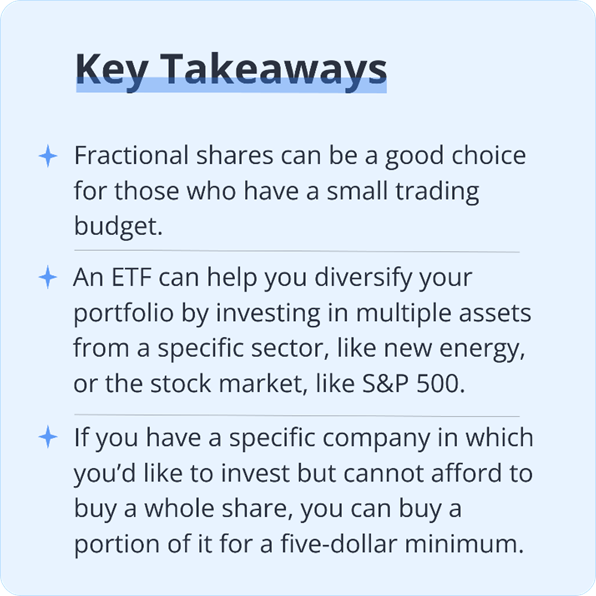
If you find ETFs are still too expensive, consider fractional shares instead.
Example:
You only have $100 in your brokerage account and want to track the whole performance of index A, which has 50 component stocks. You are most likely not going to buy these 50 stocks from A to Z. While there is an index ETF that closely tracks the index movement, its market price is $500 per share.
Scenario 1: Deposit funds you cannot afford to risk and purchase a whole ETF share?
Scenario 2: Buy a fractional share of the ETF for $100?
Tip: A fractional share enables you to buy a small portion of a whole share. This allows you to add leading companies to your portfolio with an amount you are willing to spend as opposed to the price of a whole share.
The Bottom Line
Whether your first investment is in stocks, ETFs, or fractional shares, it’s important to remember that there is no investment that can guarantee benefits while avoiding loss. ETFs tend to appear less volatile in potential returns and losses than stocks, but you will likely gain less for the same amount invested. On the other hand, stock investing requires you to be more proactive in your research before deciding which stock is right for you and your budget.
The choice is never easy, especially for a first-time investor. While there are options for every budget, be certain about your investment decisions before embarking on this new journey.